Overview
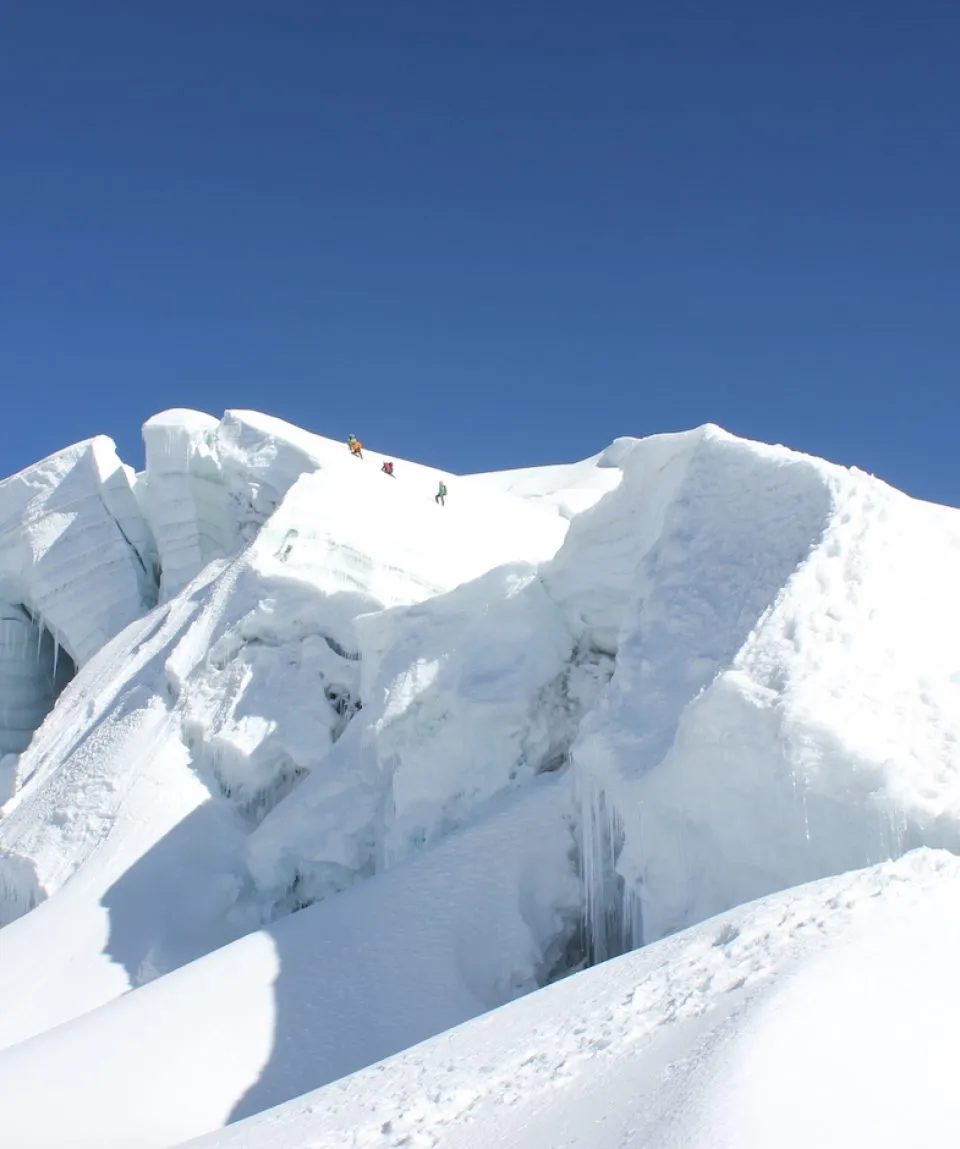
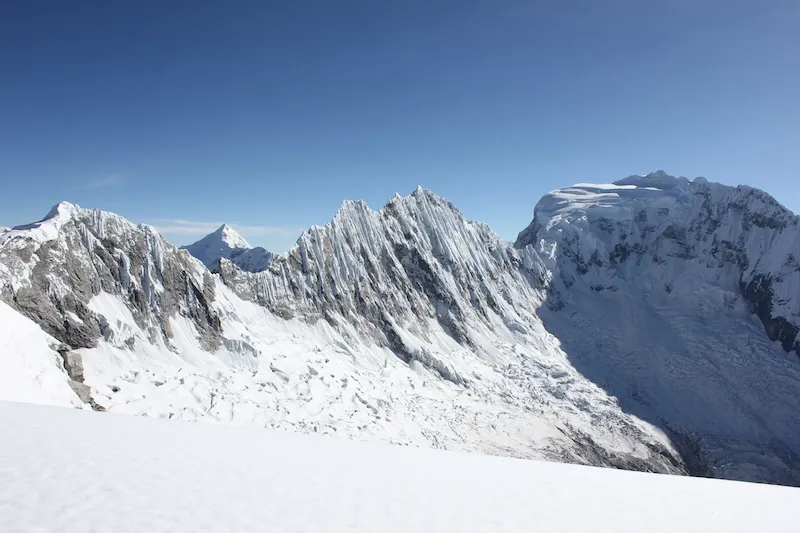
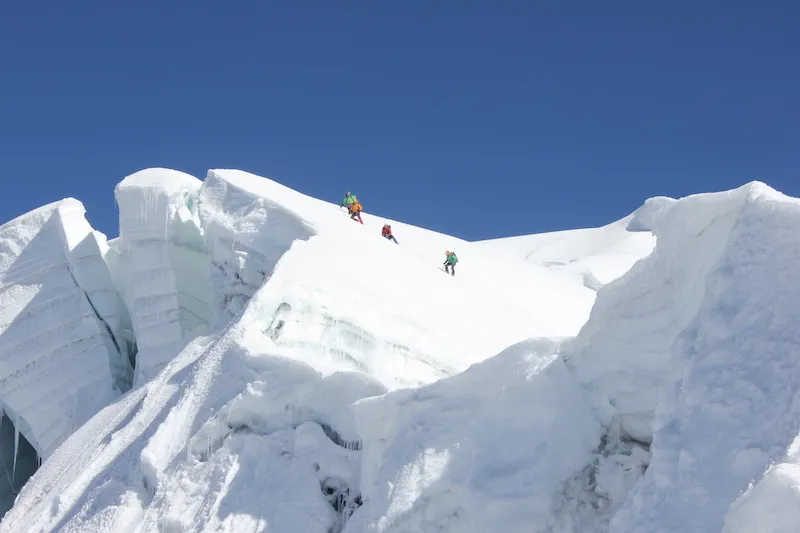
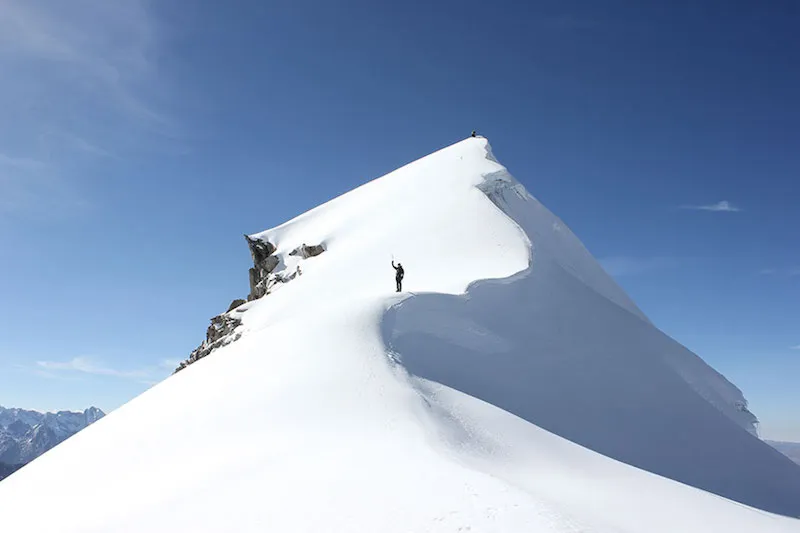
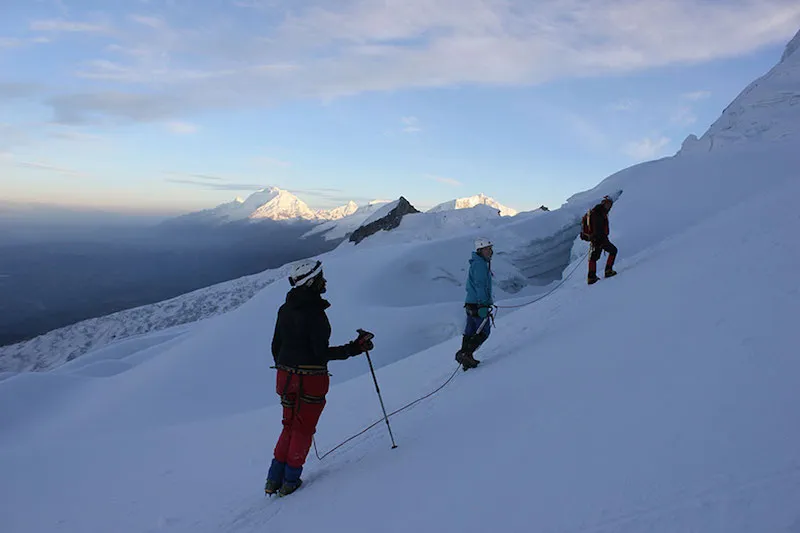
This 3-day course in the Cordillera Blanca includes training in the use of crampons and ice axes, crevasse rescue, rappelling, belaying, and the use of ice screws. The course typically concludes with an ascent of a 5,000m (16,400ft) peak, such as Vallunaraju or a similar summit..
Requirements
You are healthy and do not suffer from fear of heights. We classify this course as challenging due to the altitude as well as the steep ascent to base camp while carrying your own equipment. The course and all climbing instruction are also physically demanding. You must be strong enough to carry a medium-weight backpack up steep terrain.
You should only consider this course if you have above-average fitness and overall physical strength. It is important that you are well acclimatized beforehand in order to avoid potential problems such as lack of energy or altitude sickness while climbing. Climbing above 5,000 meters is physically demanding, even if the terrain is not steep or technically difficult.
On this ascent, you travel directly from Huaraz (3,090 m) to Moraine Camp (5,130 m), which means an altitude gain of 2,014 meters in a single day. It is therefore extremely important that you are already well acclimatized. We always recommend at least a 4-day trek for acclimatization.
Best Season
This course can be conducted year-round depending on mountain conditions. However, the best season for mountaineering in the Andes is from April to October, as the period in between is the rainy season. During this time, it is usually sunny and warm, although nights can be quite cold due to the altitude (down to -5°C).
What is included ?
Items that are included in the cost of tour price.
- Transportation according to the tour program
- Official and experienced mountain guide (Spanish / English)
- Porter for group equipment
- All meals during the course
- Tent (2 or 3 persons)
- Rope and group equipment
- First aid kit and oxygen
What is not included?
Items that are not included in the cost of tour price.
- First breakfast and last dinner
- Personal equipment and personal expenses
- Entrance fee to Huascarán National Park
- Medical treatment
- Return travel costs in case of early termination of the course
- Travel accident and health insurance
- Flights and hotel
- Tips (optional)
Day 1: Huaraz – Llaca Valley – Moraine Camp
Day 2: Moraine Camp – Glacier – Moraine Camp
Day 3: Moraine Camp – Vallunaraju Summit – Moraine Camp – Huaraz
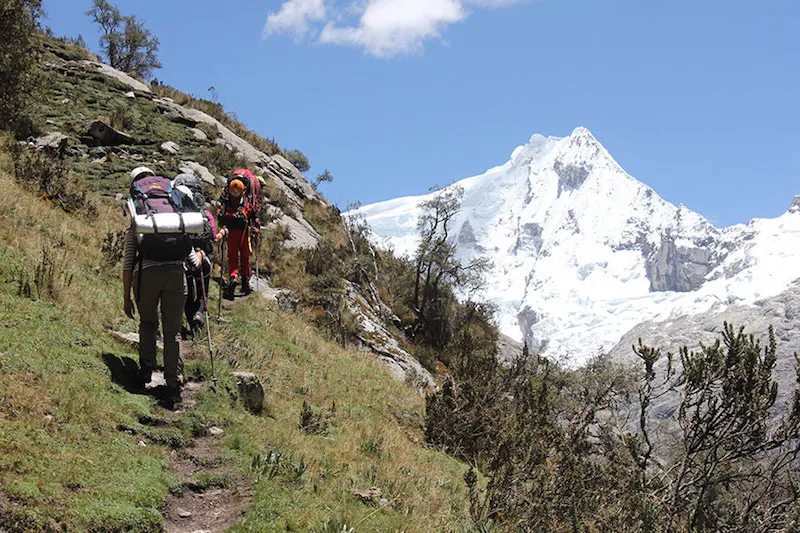
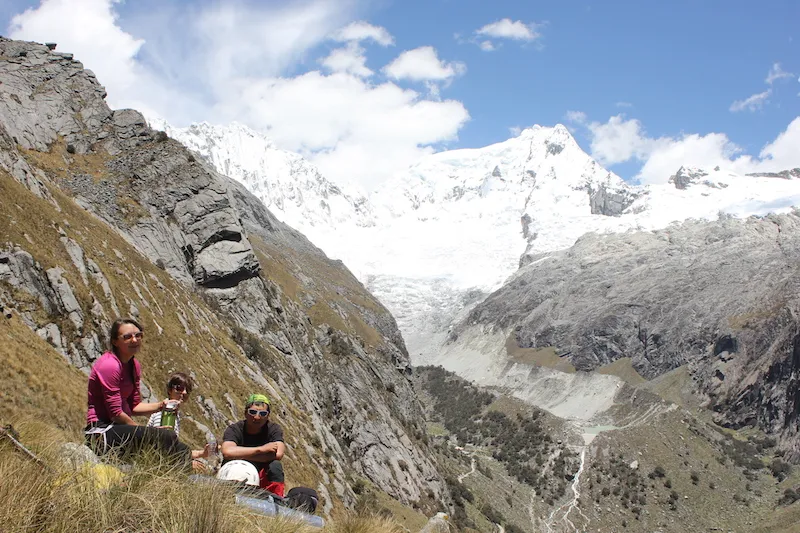
Up to Moraine Camp
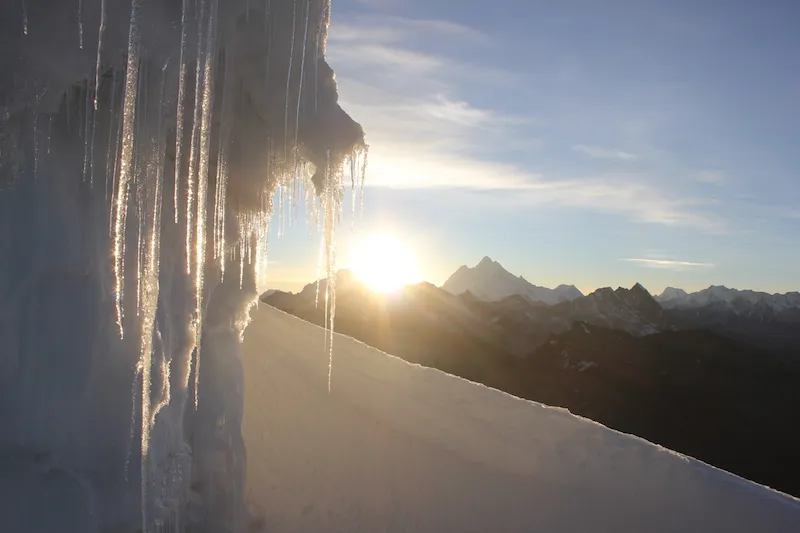
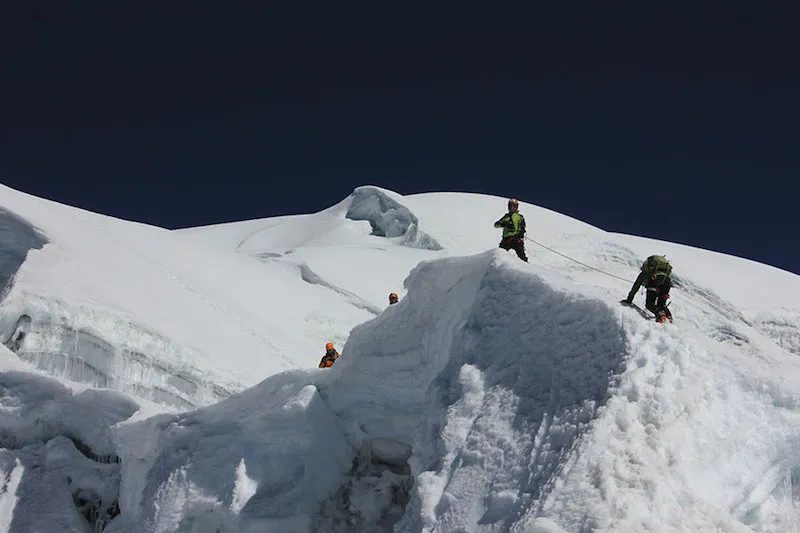
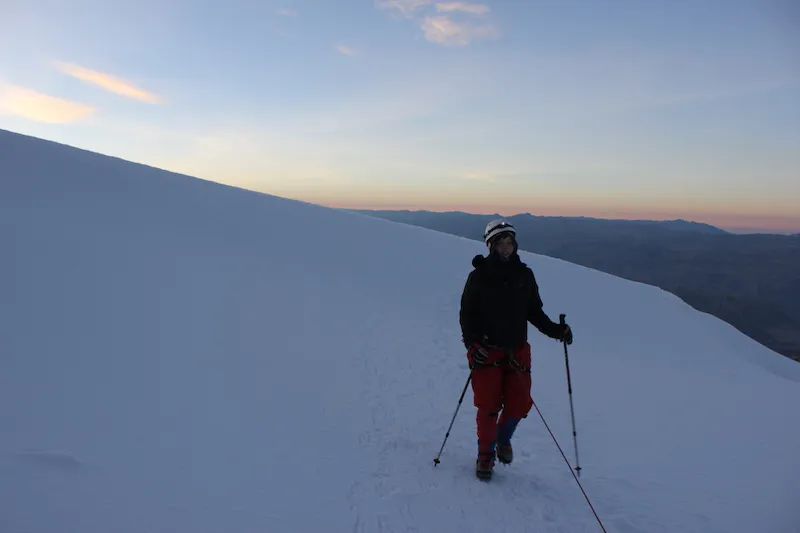
On the Glacier
Camping
During the course, you will stay in two- or three-person tents.
Meals
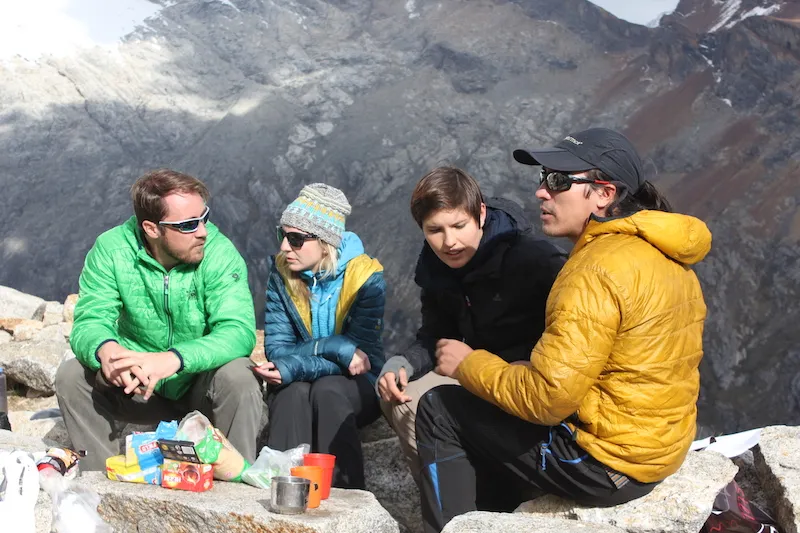
During the expedition we pay attention to a healthy and high-calorie diet. Breakfast and dinner are cooked warm. For lunch, a box lunch is served. We can prepare vegetarian dishes on request.
Luggage
You must carry your personal equipment yourself. Group equipment (including tents and food) is carried by porters.
Transport
Transportation is provided in minibuses or comfortable 4×4 vehicles, depending on the group size.
Packing list
Our recommendation
- Waterproof jacket and pants
- Very warm, waterproof gloves
- Balaclava or warm hat
- Glacier sunglasses
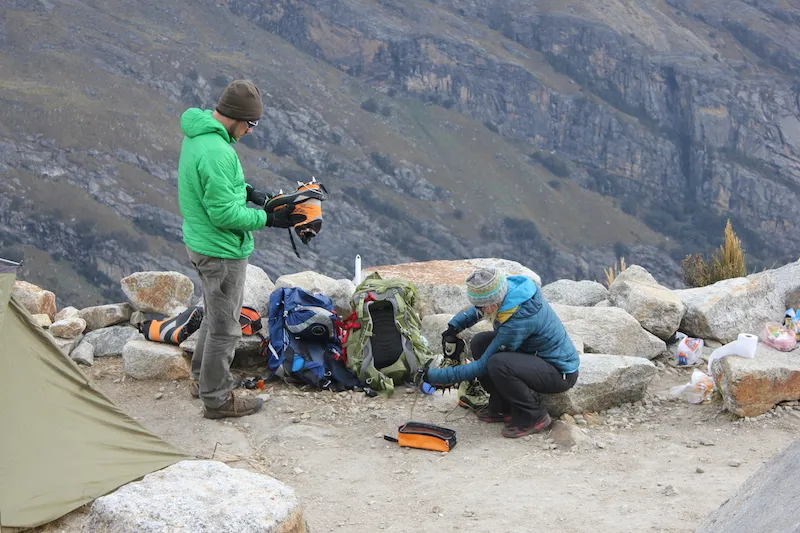
- Mountaineering boots compatible with crampons
- Trekking or mountaineering backpack (50 L, or slightly smaller)
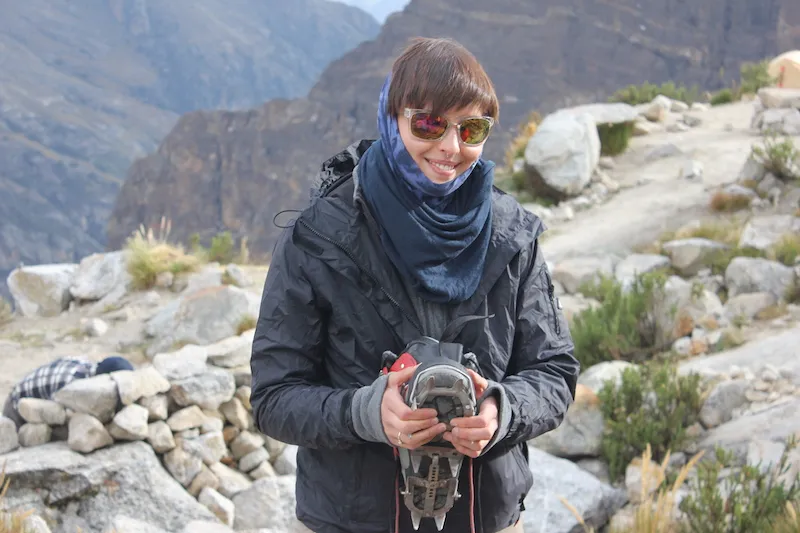
- Crampons (12-point) – fitted to your boots with lever bindings
- 2 technical ice axes
- Helmet
- Climbing harness
- Headlamp
- Down jacket
- Fleece jacket or sweater
- Comfortable clothing (quick-drying, merino wool)
- Trekking pants or sports leggings
- Long thermal underwear
- Warm trekking socks
- Sun hat, sunglasses, sunscreen (minimum SPF 40)
- Trekking poles
- Sleeping bag rated to -10°C comfort
- Toiletries and personal hygiene items
- Toilet paper or wet wipes
- Personal travel first aid kit
- Water bottle or hydration system (at least 1.5 L)
- Water purification tablets or system (e.g., Micropur)
- Extra snacks (e.g., your favorite chocolate)
- Some cash
Frequenly asked questions
Which shoes are suitable for this course?
Suitable shoes are those designed for high-altitude trekking, ice climbing, and expeditions. These types of boots have a special sole that makes bending the shoe nearly impossible. Combined with their extremely durable construction, they are highly torsion-resistant and therefore fully compatible with crampons. For use at higher altitudes, they are often additionally insulated. Depending on the type of boot, you may also need “regular” trekking shoes for the hike up to Moraine Camp.
Rental equipment or your own gear?
REVIEWS
There are no reviews yet. Be the first one to write one.
Leave a review
Image Gallery